Writers today have no shortage of publishing platforms, but that abundance often creates more confusion than clarity. Substack and WordPress dominate most conversations for good reason — Substack makes it incredibly easy to send newsletters, while WordPress powers a huge portion of the world’s websites and thrives when long-term SEO is the goal.
But not all writers create the same way. Many modern authors — especially fiction writers, serialized storytellers, and creators who want to earn directly from their work — need something different. They want a platform where they can publish chapters, sell stories, build a reader community, and avoid the overhead of managing plugins, hosting, or complicated tech setups.
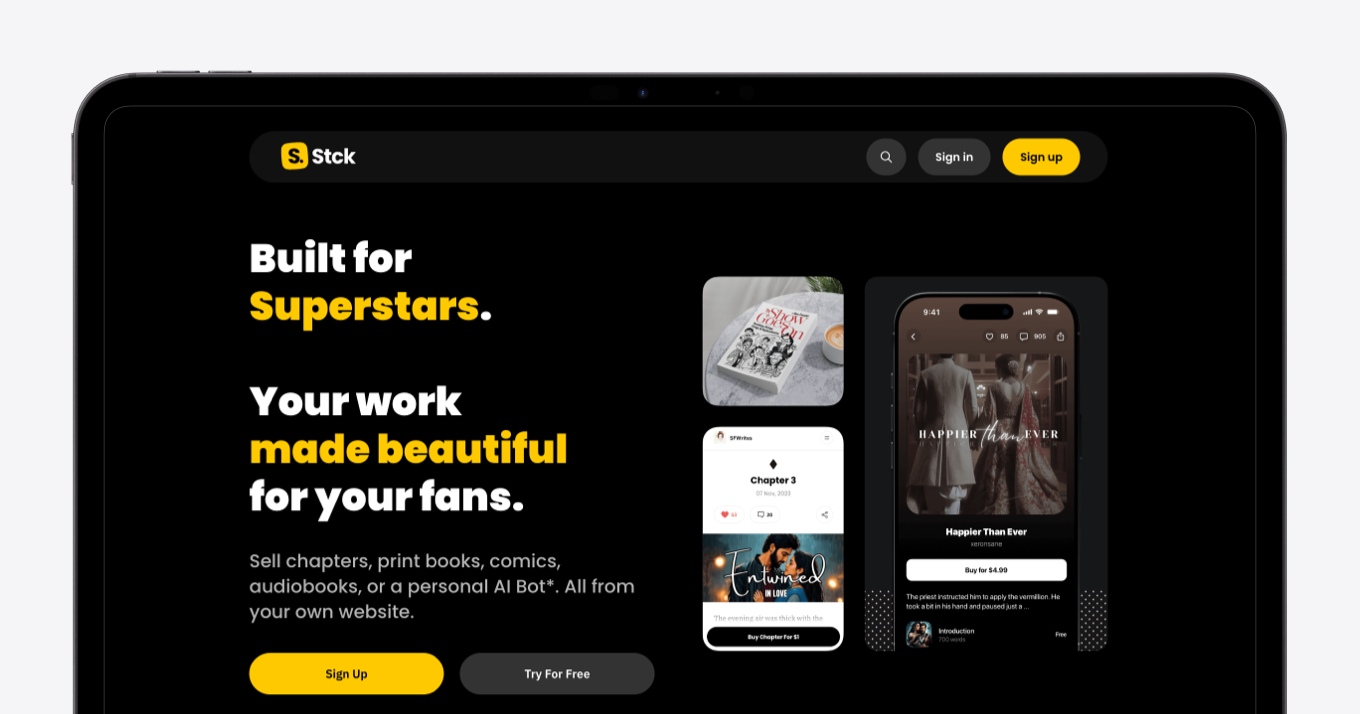
That’s where a newer option enters the picture: Stck, a platform built specifically for direct-to-reader publishing and fan commerce. It’s not a competitor to Substack or WordPress — it solves a different set of problems that matter deeply to writers focused on storytelling and reader relationships.
This guide makes the comparison simple by breaking down what each platform does best, where they fall short, and which type of writer benefits most from each tool.
TL;DR — Substack vs WordPress vs Stck
If you want a quick answer:
-
Choose Substack if you want the simplest way to publish essays or newsletters and monetize through subscriptions.
-
Choose WordPress if you want full ownership, full customization, and long-term SEO growth.
-
Choose Stck if you’re focused on storytelling — chapters, books, serialized fiction, and direct fan engagement — without managing any technical setup.
Each platform solves a different problem, and many writers combine them. Stck frequently becomes the missing piece for writers who want to earn directly from their stories with minimal friction.
Substack
What Is Substack?
Substack is a streamlined newsletter and blogging platform built for writers
who want to publish quickly and earn through paid subscriptions. You write a post, Substack delivers it to inboxes, and
the platform handles payment processing.
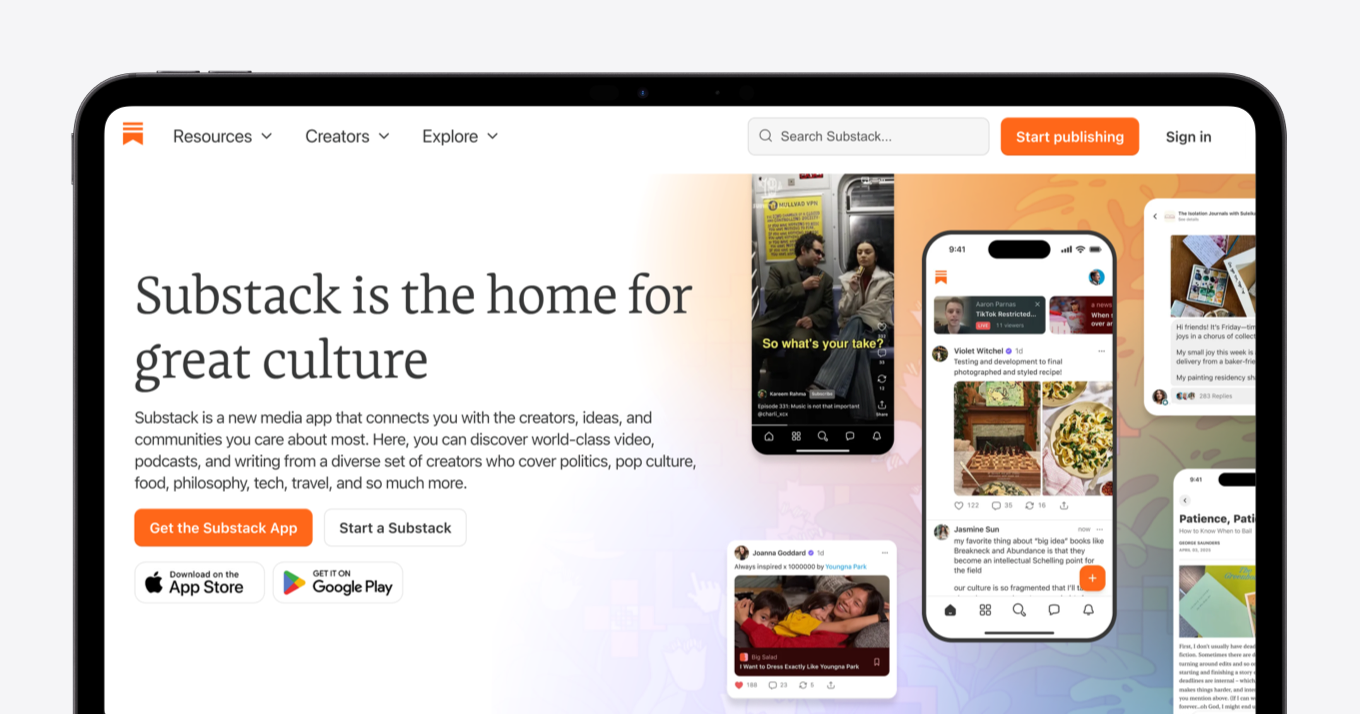
How Substack Works
Substack revolves around:
-
A minimalist writing editor
-
Automatic email delivery
-
Free vs. paid content toggles
-
Simple landing pages
-
A platform-wide recommendation network
-
A lightweight social feed (Notes)
Because of this structure, Substack is strongest for nonfiction commentary, essays, personal updates, journalism, and analysis.
What Substack Does Well
Substack excels at:
-
Delivering newsletters reliably
-
Helping creators grow through recommendations
-
Supporting subscription-based monetization
-
Keeping the writing workflow fast and distraction-free
Writers who think in terms of email-first communication often find Substack refreshingly simple.
Where Substack Falls Short
Substack is not designed for:
-
Multi-chapter storytelling
-
Serialized fiction
-
Selling individual stories
-
Direct ebook or chapter sales
-
Fan commerce
-
Building a complete author “hub”
-
SEO-driven visibility
This is less a weakness and more a sign that Substack was never intended for story-based creators.
Where Stck Fits Better
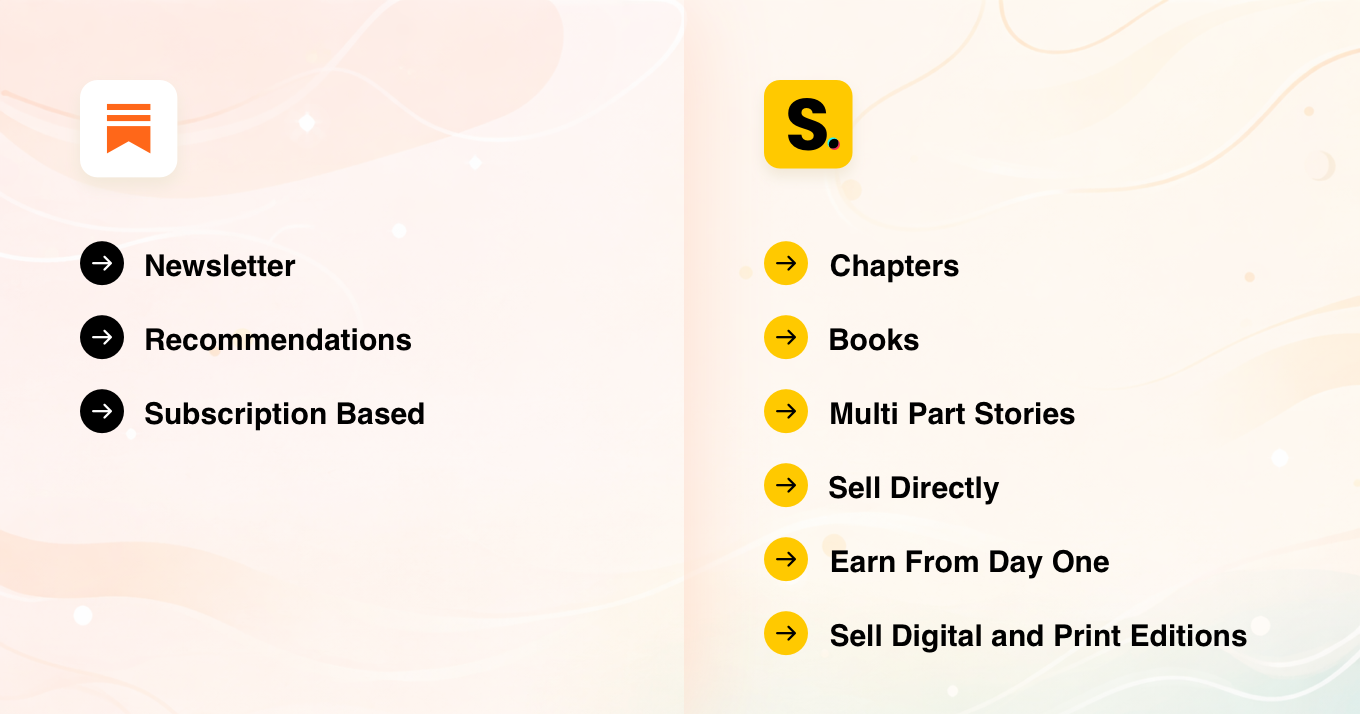
For writers focused on storytelling, Stck provides functions Substack doesn’t
offer:
-
Publish chapters, books, multi-part stories
-
Sell content directly without a subscription paywall
-
Build and own your reader base
-
Earn from the very first day
-
Release digital and print editions from the same place
Substack is built for communication.
Stck is built for storytelling.
Writers who publish fiction or narrative content often pair Substack with Stck (story publishing + earnings).
WordPress
What Is WordPress?
WordPress is the most powerful and customizable website platform available. It
can be used to create blogs, portfolios, author sites, stores, membership hubs, and more.

What WordPress Costs
WordPress itself is free, but using it professionally typically includes:
-
Hosting: $4–$20/month
-
Domain: $10–$20/year
-
Premium themes: $40–$100
-
Plugins: free–$300+
A fully set-up author site generally costs $60–$300 per year.
What WordPress Does Well
WordPress is the strongest platform for:
-
Long-term SEO
-
Complete design freedom
-
Owning your content and domain
-
Integrating external tools (email, payments, memberships)
-
Creating multi-format sites (blog + store + interviews + book pages)
Writers building long-term brand authority or SEO-driven readership often rely on WordPress.
Where WordPress Falls Short
WordPress becomes challenging for story-focused creators because it
requires:
Setup
-
Maintenance
-
Plugins for payments
-
Extra tools for email
-
Manual formatting or integrations for ebooks or chapters
-
No built-in serialization workflow
-
No community/fandom features
It’s powerful — but often heavier than what fiction writers need.
Where Stck Becomes More Practical
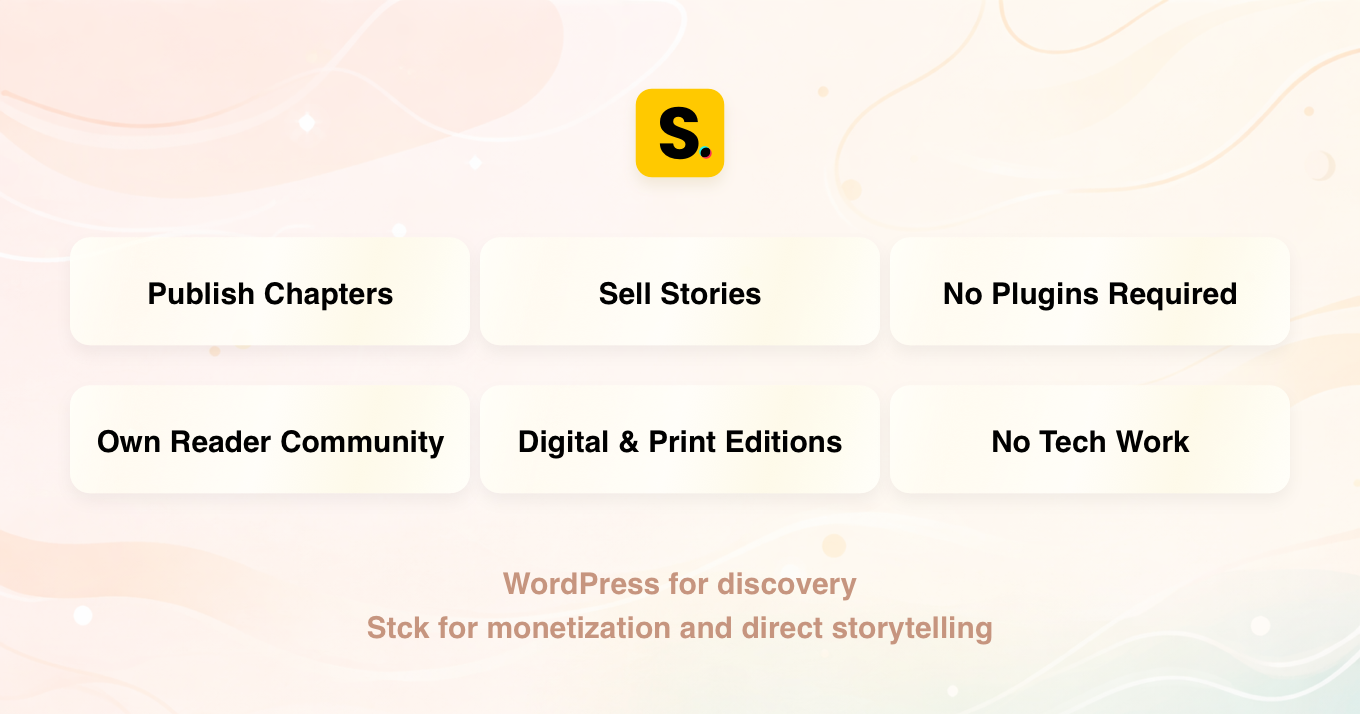
If a writer wants to:
-
Publish chapters fast
-
Sell stories without plugins
-
Build a reader community inside their workflow
-
Offer digital + print from one place
-
Avoid tech work entirely
…then Stck becomes the more functional choice.
WordPress is the right platform for SEO and branding.
Stck is the right platform for publishing and selling stories.
Many authors use both: WordPress for discovery + Stck for monetization and direct storytelling.
Substack vs WordPress vs Stck: Practical Comparison
Below is a simplified, functional breakdown.
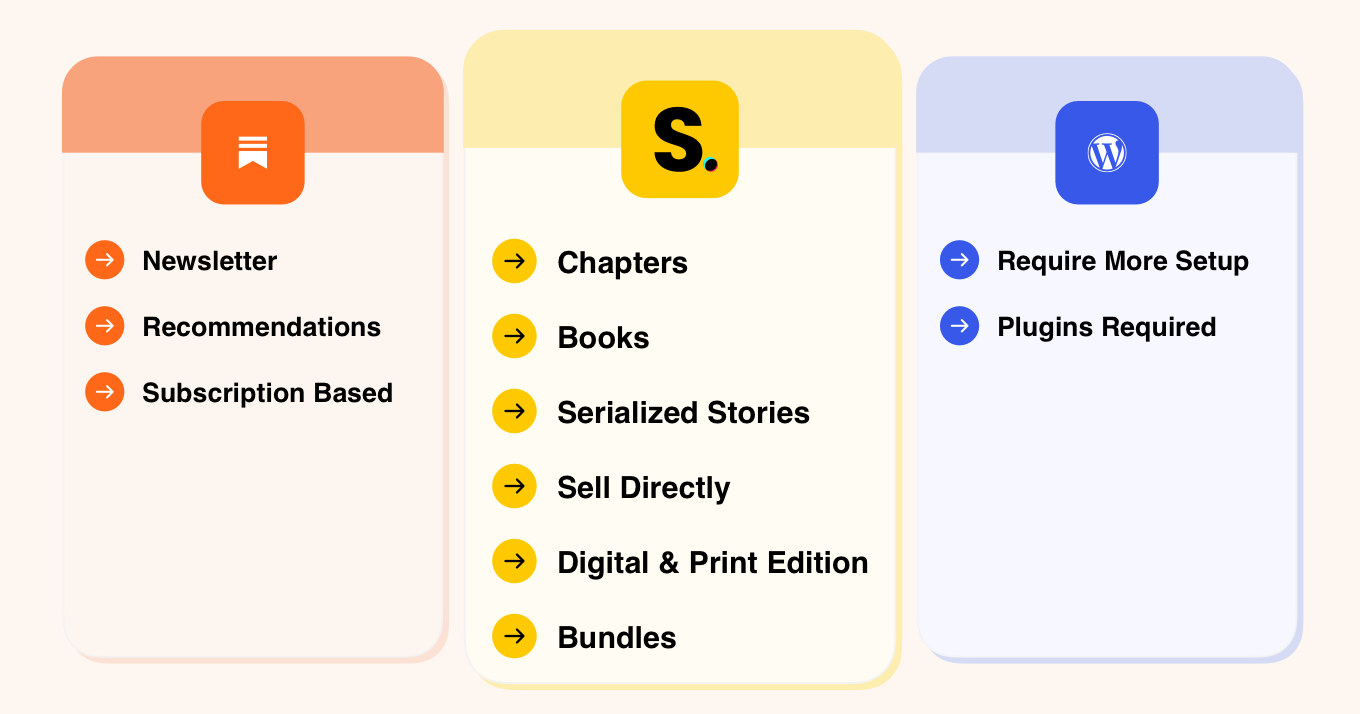
Ease of Use
-
Substack: Easiest — login, write, send
-
WordPress: Requires the most setup
-
Stck: As simple as Substack, but optimized specifically for story publishing and sales
Customization
-
Substack: Minimal
-
WordPress: Maximum
-
Stck: Clean, simple customization focused on storytelling
Monetization
-
Substack: Subscriptions only
-
WordPress: Many options (plugins required)
-
Stck: Built-in direct sales for chapters, stories, ebooks, and print editions
- No plugins, no paywalls, no tech overhead
Audience Ownership
-
Substack: Partially platform-controlled
-
WordPress: You own everything
-
Stck: Full ownership with zero setup
SEO
-
Substack: Limited
-
WordPress: Best for search traffic
-
Stck: Search-friendly author pages + strong direct-to-reader funnel
Publishing Formats
-
Substack: Posts + newsletters
-
WordPress: Any format with plugins
-
Stck:
-
Chapters
-
Serialized stories
-
Full ebooks
-
Print editions
-
Bundles
-
Direct sales
-
Stck is the only platform designed around a storytelling workflow rather than a blogging or website workflow.
When Each Platform Is the Right Choice
Choose Substack When:
-
You publish essays, commentary, analysis
-
You want fast newsletter delivery
-
You prefer subscription-based income
Choose WordPress When:
-
You want a full author website
-
SEO is a major part of your strategy
-
You need complete control over design and structure
Choose Stck When:
Stck is the strongest choice when you:
-
Write fiction or serialized content
-
Publish in chapters or story arcs
-
Want to monetize early without subscriptions
-
Want direct reader support
-
Want to sell ebooks or print books easily
-
Prefer not to manage plugins or hosting
-
Want an ecosystem built around storytelling
Substack = communication
WordPress = visibility
Stck = storytelling + monetization + fan relationships

Cost Comparison
Substack
-
Free to start
-
10% fee on revenue
-
No hosting or plugins required
WordPress
-
Hosting, domain, plugins
-
Most affordable long-term for full websites
Stck
No setup
-
No hosting
-
No plugins
-
Earn immediately through direct sales
For story-based creators, Stck is typically the most cost-efficient path to sustainable income.
Bottom Line: Which Platform Should Writers Choose?
The real decision isn’t “Substack or WordPress?”
It’s “What kind of writer are you, and how do you want to earn?”
-
Substack → best for essayists, commentators, and newsletter-first writers
-
WordPress → best for long-term SEO, brand-building, and custom websites
-
Stck → best for fiction writers, serialized authors, and creators focused on direct-to-reader storytelling and fan commerce
Many modern writers use all three:
-
Substack for updates
-
WordPress for SEO
-
Stck for publishing and earning
If your primary work is storytelling, Stck will feel like the tool you should have had all along.
Frequently Asked Questions (FAQs)
Which platform is better for newsletters — Substack or WordPress?
Substack is easier for newsletters. WordPress can match it with plugins but requires setup. Stck complements both by focusing on story publishing rather than email delivery.
Which platform is easier to monetize on?
Substack supports subscription-based income. WordPress requires monetization plugins. Stck offers immediate monetization through story and chapter sales — a model that works especially well for fiction and serialized creators.
Which is best for SEO?
WordPress leads in SEO. Substack is limited. Stck provides search-friendly author pages but focuses more on direct fan engagement than ranking algorithms.
Do I need technical skills to use these platforms?
Substack: none.
WordPress: some comfort with hosting, plugins, and layouts.
Stck: none — it’s as simple as
Substack but built for storytelling.
Which platform is most cost-effective?
Substack is cheapest for newsletters.
WordPress is cheapest for long-term website ownership.
Stck is often the
most cost-effective for fiction writers because you earn without upfront setup costs.