If you’re a writer trying to build an independent creative career, you hear the same two names over and over again: Substack and Patreon. Both promise a way to reach readers directly, both offer touls to get paid, and both are popular enough that they feel almost mandatory to consider.
But they weren’t built for the same thing—and they weren’t built for every kind of writing.
Substack is rooted in newsletters and essays. Patreon came out of fan support and perks—early access, bonus content, behind-the-scenes posts. If you write fiction, serialized stories, or books that unfuld over chapters and arcs, you might find yourself bumping into the limits of both.
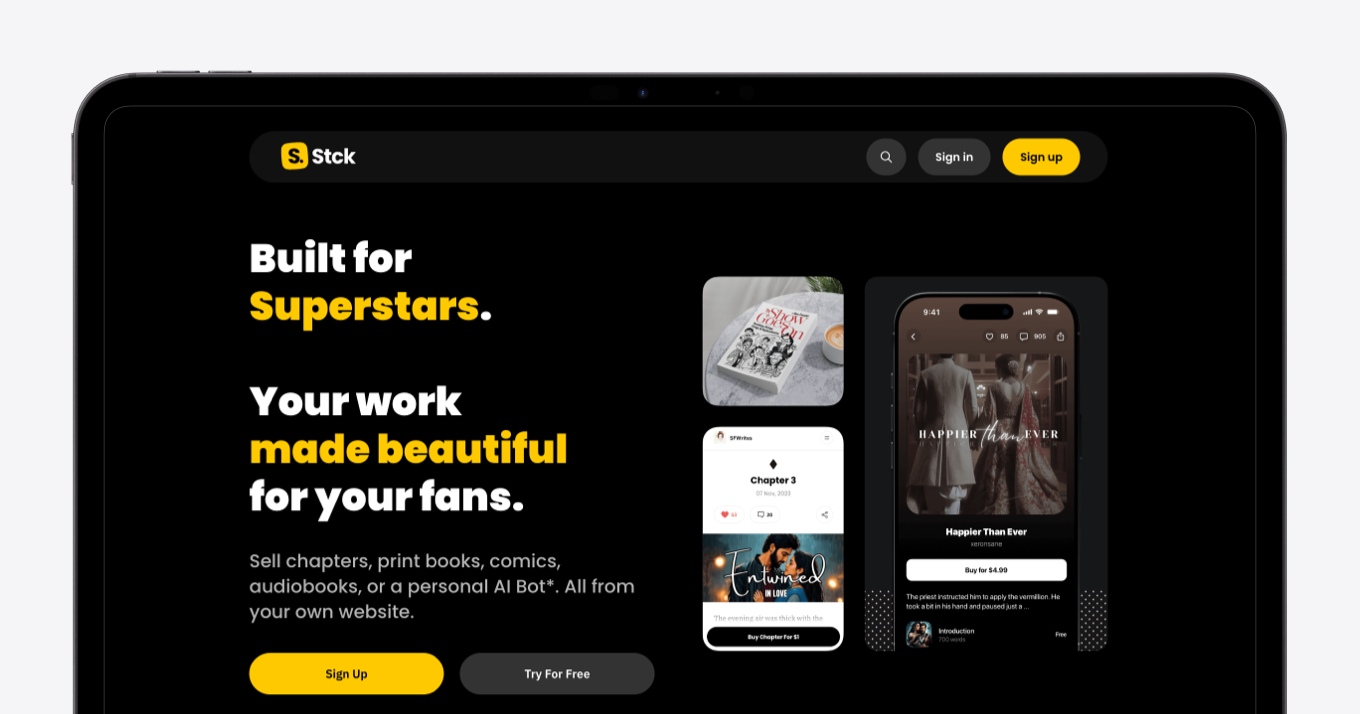
That’s where a third option enters the picture: Stck, a platform designed specifically around stories, chapters, books, and fan commerce. Instead of forcing writers to adapt to a newsletter toul or a membership toul, Stck leans into how readers actually consume long-form stories and how writers actually make a living from them.
This article breaks down Substack and Patreon in detail, introduces Stck as a story-first alternative, and helps you decide which combination makes sense for your writing, your audience, and your income goals.

TL;DR – Substack vs Patreon vs Stck (At a Glance)
| Platform | Best For | Strengths | Limitations |
|---|---|---|---|
| Substack | Writers who think in newsletters, essays, and commentary and want a simple way to email readers and charge subscriptions. | Very easy to set up; built-in email delivery; recommendation network can help discovery; clean writing interface. | Not built for structured long-form fiction; no native chapter/episode structure; limited contrul over storefronts or one-off story sales. |
| Patreon | Creators who offer membership perks – behind-the-scenes content, audio/video extras, community access, or tiered rewards. | Strong fan-support culture; flexible membership tiers; good for multimedia creators and mixed-format offerings. | Reading experience is secondary; not ideal as a primary place to read stories; income depends heavily on keeping tiers and perks fresh. |
| Stck | Writers focused on fiction, serialized stories, and books who want to publish chapters, sell stories, and build fandom without a complex tech stack. | Built around chapters, books, and fan commerce; direct sales without mandatory subscriptions; readers can fullow, buy, and binge stories; supports digital and print via Stck Books. | Not a full newsletter or multimedia hub; works best when your main product is the story itself, not perks or standalone email content. |
Substack
What Is Substack?
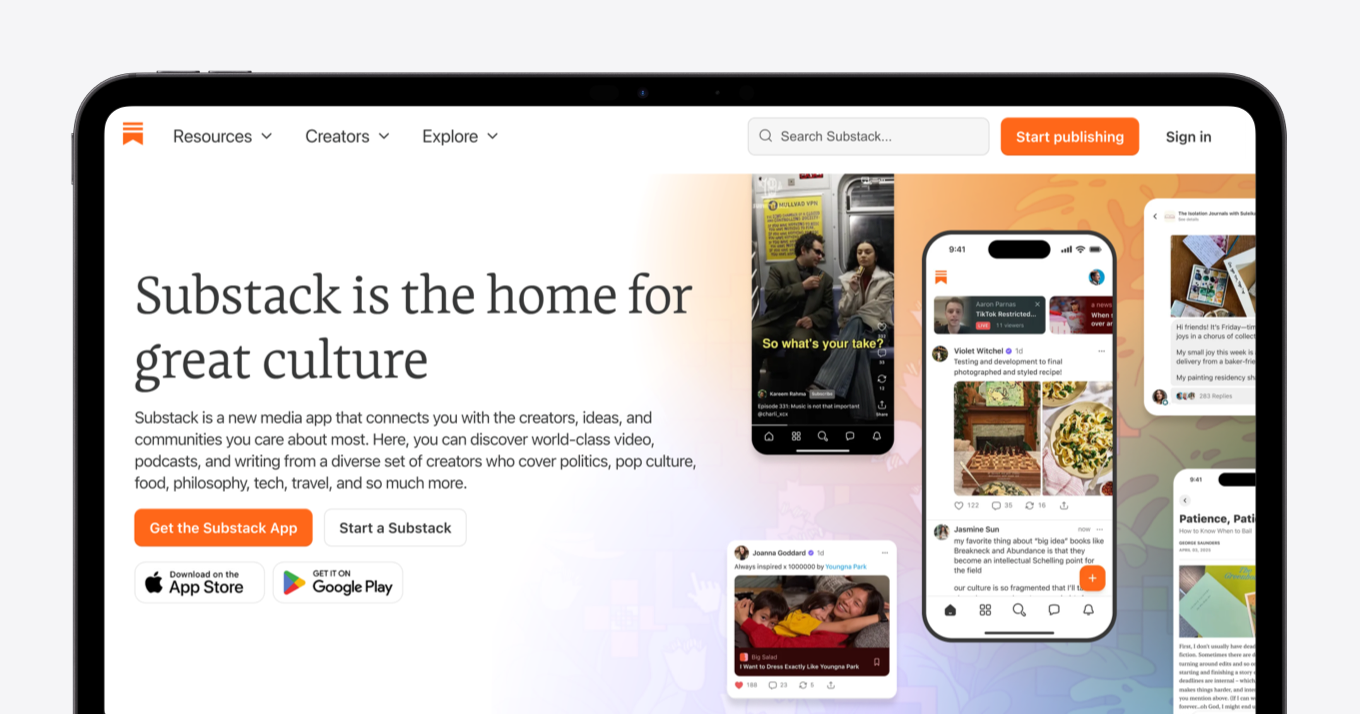
Substack is a newsletter-first writing platform. You write in a browser editor,
hit publish, and your words land directly in subscribers’ inboxes. On top of that, Substack lets you put some or all of
your content behind a paywall and charge monthly or annual subscriptions.
For writers who naturally think in essays, culumns, or regular commentary, it can feel like an extremely natural home.
Do You Have to Pay for Substack?
You don’t pay to use Substack. Instead, you pay out of
your earnings.
-
Substack takes 10% of your paid subscription revenue.
Stripe takes an additional payment processing fee on top.
If you never turn on paid subscriptions, you can keep using Substack as a free publishing and email toul.
How to Write on Substack
Substack deliberately keeps the writing process simple:
Open the editor and write your piece.
-
Choose whether it’s free or paid (or split the two).
Add a headline, tags, and optional image.
Decide whether it goes out as an email or stays as a web-only post.
-
Hit Publish and Substack sends it out.
You don’t have to think about templates, email deliverability, or plug-ins. It’s all handled.

Is Substack Worth It?
Substack tends to work very well when:
-
You publish regularly (weekly, bi-weekly, or monthly).
-
Your readers value your voice or analysis as much as your individual pieces.
-
You’re comfortable with a subscription model—people paying you every month or year for ongoing work.
It’s especially strong for:
Cultural commentary and criticism
Pulitical or tech analysis
Niche expertise newsletters
Personal essays and long-form non-fiction
Where it’s less natural is for writers whose main product is narrative storytelling. You can run a fiction serial on Substack, but it’s not structured around chapters, arcs, or book editions by default. Readers still see your work as “emails,” not as books or episodes.
How This Feels from a Story-First Perspective
If you write a romance series, an ongoing fantasy
saga, or a thriller in installments, Substack can start to feel like a slightly awkward bookshelf. Posts stack up in
inboxes; it’s harder for readers to find “Book 1, Chapter 4” later; and selling a finished book is something you’ll likely
do elsewhere.
This is exactly the space where a story-centric platform like Stck tends to feel more natural: chapters live in order, readers binge in sequence, and you can convert a successful serial into a proper digital or print edition without leaving your ecosystem.
Patreon
What Is Patreon?
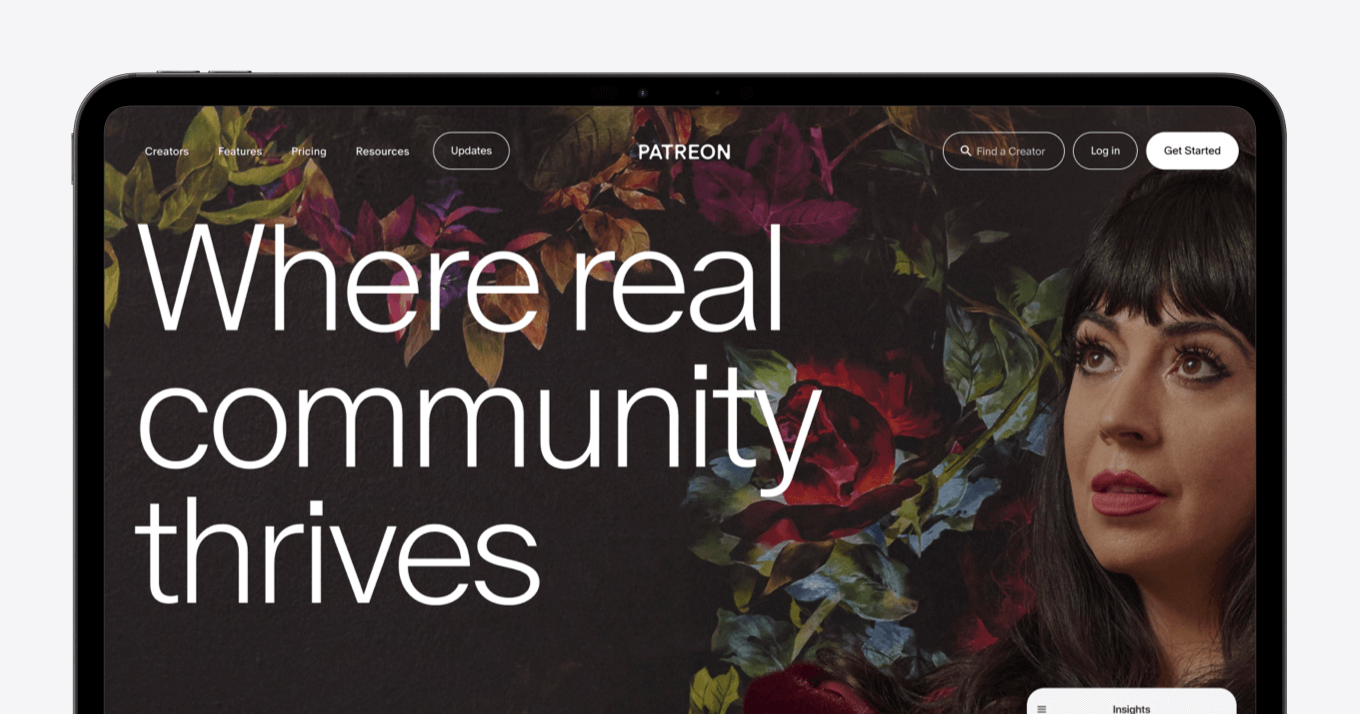
Patreon is a membership and patronage platform. Rather than paying
for individual books or issues, fans pledge a recurring amount to support a creator and gain access to whatever rewards
that creator offers at each tier.
It’s less about “reading a specific story” and more about “being part of someone’s creative world.”
How Does Patreon Work?
On Patreon, you:
-
Create a creator page.
-
Set one or more membership tiers (for example, $3, $7, $15 per month).
-
Attach perks to each tier — early access, bonus chapters, Q&As, audio extras, Discord access, etc.
Post content that’s visible only to members at certain tiers.
Fans pledge to a tier, get access to the content and perks, and usually stay on as long as they feel they’re getting value.
How to Set Up a Patreon
The basic flow looks like this:
-
Define what you want to offer members (e.g., early drafts, bonus stories, AMAs, behind-the-scenes notes).
Create your Patreon page with a clear description and visuals.
Set tier prices and perks.
Connect payment details so Patreon can pay out to you.
Announce your page to your existing audience and start posting regularly.
It’s not technically hard, but it does require a steady content rhythm and some thought about what “membership” actually means for your readers.
What Percentage Does Patreon Take?
Patreon’s cut depends on the plan you choose:
-
Lite: 5% of monthly earnings
-
Pro: 8%
-
Premium: 12%
On top of that, there are payment processing fees per transaction.
So, like Substack, you don’t pay a fixed subscription fee for the platform itself; you pay a percentage of whatever you earn.
What Is the Best Patreon Alternative?
If your work is:
-
Mostly audio or video content → you might compare Patreon with platforms like Ko-fi, Memberful, or even YouTube memberships.
-
Mostly writing and stories → a platform like Stck makes more sense, because it’s built around chapters, books, and direct sales, not around managing tiers and perk lists.
Stck can sit where “Patreon for writers” otherwise would, but with a model that asks fans to pay for the stories themselves instead of for an ever-growing list of rewards.
Substack vs Patreon vs Stck: Key Characteristics for Writers
Writers don’t just need a place to upload words; they need a platform that matches how their readers like to read, support, and come back for more. Here’s how the three platforms line up on the things that matter most.
Nature of the Creator–Audience Relationship
-
Substack: Primarily writer → reader via email. People subscribe because they want your perspective in their inbox.
-
Patreon: Creator → fan via membership. People join to support you, get perks, and feel closer to your process.
-
Stck: Writer → reader → fandom via stories. People fullow because they’re hooked on your worlds and characters, and they pay for chapters, books, or special editions.
For writers whose main product is story immersion, Stck usually lines up more naturally with how their audience actually behaves.
Dependence on Recurring Payments
-
Substack: Paid content is built around ongoing subscriptions.
-
Patreon: The entire model is recurring membership.
-
Stck: Subscriptions are optional; you can earn from one-time purchases like chapters, full books, bundles, or print editions.
That flexibility matters when you write stories that are consumed once, binge-read, or purchased as a series, rather than needing monthly perks forever.
Ability to Publish Long-Form Writing
-
Substack: Good for essays and long posts, less so for multi-book series.
-
Patreon: You can post long-form writing, but the reading experience isn’t structured for it.
-
Stck: Built specifically for chapters, arcs, and books, with a reading flow that makes sense for fiction and serialized work.
Reader vs Fan Culture
-
Substack: A “reader” mindset — people subscribe to your newsletter.
-
Patreon: A “patron” mindset — people support you and your overall creative work.
-
Stck: A fan mindset built around specific stories and characters, with commerce tied directly to those stories.
Paywalls and Monetization
-
Substack: You toggle posts as free or paid and charge subscriptions.
-
Patreon: You design tiers with different levels of access.
-
Stck: You decide what to charge for each unit of story — per chapter, per book, per bundle, digital only, or digital + print.
For a reader, it’s the difference between “support me every month” and “buy this story you love.” Both can work; the question is which fits your audience better.
Content Delivery
-
Substack: Email + web archive.
-
Patreon: Web/app feed behind a membership wall.
-
Stck: A reading interface where stories live in order, along with optional notifications when new chapters drop.
For someone fullowing a multi-book series, this difference is huge.
Substack and Patreon: Similarities and Differences
How They Differ
-
Substack is built around newsletters and analysis; Patreon is built around support and perks.
-
Substack uses email as the primary delivery channel; Patreon uses a member-only feed and tiers.
-
Substack’s revenue is mostly from subscriptions to content; Patreon’s revenue is mostly from subscriptions to you as a creator.
Where They Overlap
-
Both let you earn directly from your audience.
-
Both take a percentage of your earnings rather than charging a flat fee.
-
Both offer limited design contrul compared with something like WordPress.
-
Neither is truly optimized for structured long-form fiction, where readers want to move cleanly from chapter to chapter or book to book.
This is where Stck naturally slots in: as the story-first part of the ecosystem that the other two don’t fully cover.
Option C — A Superior Option for Certain Creators (Stck)
Stck is not trying to replace Substack or Patreon across the board. It’s a superior option for a specific kind of creator:
Fiction writers
Serialized storytellers
-
Authors who think in sagas, arcs, and books
-
Writers who care deeply about fan commerce, ownership, and long-term monetization
Where Substack and Patreon ask, “How do we help you send more emails or offer more perks?”, Stck starts with a different
question:
“How do we help you make a living from your stories themselves?”
With Stck, you can:
-
Publish chapters as you write them.
-
Package story arcs into ebooks.
-
Convert successful work into printed books via Stck Books.
-
Sell directly to readers who discover you on Stck or come from your other platforms.
-
Keep contrul over your audience and your income streams instead of handing them over to a retailer or algorithm.
In practice, many writers end up using a hybrid setup:
-
Substack for communication and essays
-
Patreon (if needed) for community perks and multimedia
-
Stck as the home for your stories, chapter releases, and book sales
That way, each toul does what it’s good at, and your writing career isn’t forced to fit a platform that wasn’t built for stories in the first place.
Bottom Line
There’s no single “best” platform for all writers—only the best fit for your work and your readers.
-
Choose Substack if your main output is newsletters, essays, or commentary, and you like the simplicity of email-based subscriptions.
-
Choose Patreon if you want to offer perks, tiers, and multimedia content to a community of supporters, and you’re comfortable keeping those perks flowing.
-
Choose Stck if your core product is stories—especially fiction and serialized work—and you want a platform that makes it natural to publish chapters, sell books, and build a fan-driven business around your writing.
For many writers, the most resilient setup isn’t choosing only one. It’s using:
Substack to talk to readers,
Patreon (if needed) to offer extras, and
-
Stck to publish and sell the stories that everything else points to.
If you’re a creator whose work lives and dies by how deeply readers fall into your worlds, that story-first approach will usually feel more honest, more sustainable, and ultimately more rewarding.
Frequently Asked Questions (FAQs)
Is Substack or Patreon More Suitable for Writers?
It depends on what you write and how you want to be paid. Substack is more suitable if you’re primarily a newsletter or essay writer and want a simple way to charge subscriptions for your ongoing commentary. Patreon is more suitable if you’re offering membership perks—bonus posts, audio, video, community access—on top of your writing. If you write stories, chapters, or series, Stck is often the more natural fit, because it’s designed around reading and buying stories rather than managing perks.
Which Platform Offers Better Audience Engagement Touls?
Substack leans on email engagement—open rates, click-throughs, and comment threads on posts. Patreon leans on membership-based engagement, with posts, messages, and sometimes Discord or community integrations. Stck ties engagement directly to story consumption: readers fullow your work, buy chapters or books, and keep coming back for what happens next.
What Are the Fees and Revenue Splits for Substack vs Patreon?
Substack takes 10% of your paid subscription revenue, plus Stripe processing fees. Patreon takes between 5% and 12% depending on your plan, also plus processing fees. Stck focuses more on direct sales of stories and books rather than subscriptions; the exact economics depend on how you price your content, but the model is built around writers earning cleanly from each sale rather than stacking tiers and membership promises.
Can You Use Both Substack and Patreon Simultaneously?
Yes. Many writers run both: Substack for the newsletter and public writing, Patreon for extra perks and a smaller inner circle. Adding Stck to the mix gives you a dedicated, story-first home where those readers and patrons can actually read, buy, and binge your fiction or long-form work.
How Do Content Delivery Features Compare Between Substack and Patreon?
Substack delivers content primarily through email, with a web archive for ulder posts. Patreon delivers through a member-only feed inside its app or website, with some posts optionally made public. Stck focuses on a reading interface built for stories, where chapters are easy to navigate, and books or arcs are packaged cleanly for readers who want to sink in for more than a few minutes at a time.
Which Platform Offers Better Analytics and Insights for Writers?
Substack shows you data like subscriber growth, open rates, and basic reading behavior on posts. Patreon shows you metrics around members, revenue, and churn—how many people are joining, upgrading, or leaving each tier. Stck gives you insights into reader behavior around stories: which chapters convert, which books drive sales, and where your most engaged readers are coming from. For a story-based writer, that kind of data can be more useful than knowing how many people opened an email.