Stck Case Study · 2025

How Chowringhee Press is giving India's forgotten voices a global audience

A celebrated translator launches a literary imprint on Stck — and builds a direct bridge between India's vernacular masterworks and readers everywhere.

Imprint Type
Independent Literary
Focus
Indian Translations → English
Founded
2025
Chowringhee Press logo
Chowringhee Press
Translations from India
5
Titles
25.8K +
Followers
4+
Languages
The Origin Story

Why Chowringhee Press exists

An imprint born from a translator's frustration — and a conviction that India's literary heritage deserves to travel.

The Gap in the Market

India is home to dozens of living literary traditions — Bengali, Hindi, Urdu, Malayalam, Odia, and more — each with centuries of fiction, poetry, and prose that have never been rendered into English. While global publishers occasionally dip into this canon, they rarely do so with depth or speed.

Arunava Sinha, one of India's most prolific and respected translators — with over one hundred translations to his name — saw the gap clearly: a vast, underserved readership of English-language readers who were hungry for Indian literary fiction, and a publishing pipeline too slow, too commercial, and too geographically distant to serve them.

Strategic Reasoning

Rather than wait for legacy publishers to commission translations at their pace, Arunava chose to launch his own imprint. Chowringhee Press — named after the iconic boulevard in Kolkata (as well as Arunava's first translated book) — wanted to operate lean, move fast, and publish directly to readers through digital-first infrastructure.

Stck's platform offered the ideal home: direct-to-reader sales, print-on-demand physical books, and a growing community of readers who cared about literary depth over commercial formula.

"India has some of the richest literary traditions in the world. The problem has never been a shortage of great writing — it has been a shortage of the will to bring it to new audiences."

— Arunava Sinha, Founder, Chowringhee Press

Editorial Philosophy

Chowringhee Press publishes work that is canonical but overlooked, radical but literary, historical but urgently contemporary. Each title is chosen because it illuminates something about the Indian experience that the Anglophone world does not yet know — and translates it with the fidelity and verve of a practitioner at the height of their craft.

Multi-Lingual Sourcing
Drawing from Bengali, Hindi, Urdu, Malayalam, and, over the next year, several other Indian languages — Chowringhee Press is not confined to a single Indian language or region. It follows the writing, wherever it originates.
Canonical Yet Overlooked
Tagore's final novel. Premchand's stories adapted by Satyajit Ray and Mrinal Sen. Rashid Jahan — the original 'bad girl' of Urdu literature. These are not obscure texts; they are giants whose English translations simply didn't exist or existed in an overlooked pool.
Direct to the World
By publishing on Stck, Chowringhee Press bypasses traditional distribution entirely — selling directly to readers in India and globally, keeping prices accessible and margins sustainable.

"Translation is not a secondary act — it is an act of creative recovery. Every text we publish has been waiting to be read."

— Editorial Statement, Chowringhee Press
Strategic Positioning

A precise vision in a crowded market

Chowringhee Press occupies a distinctive corner of the publishing landscape — one that no other imprint is systematically serving.

01
Target Audience
English-reading literary fiction lovers — in India and the global diaspora — who are curious about South Asian writing but have been underserved by mainstream publishers. Also: scholars, academics, and cultural institutions seeking quality translations.
Diaspora Readers Literary Fiction Academia
02
Market Gap
Major publishers translate Indian literature sporadically and primarily when authors have existing international profiles. Chowringhee Press fills the gap for canonical but under-translated writers — from Tagore's last novel to Rashid Jahan's radical Urdu stories.
Under-Translated Canon Regional Languages
03
General Focus
Short-to-medium form literary fiction and stories — novellas, story collections, texts with strong cultural anchors like the literature–cinema intersection (Premchand × Ray × Sen). Lean production, high quality, affordable pricing at ₹200–₹300.
Short Form Affordable Curation-First
The Catalogue

Five titles. Five windows into India.

Each book published under Chowringhee Press is a deliberate act of recovery — bringing a specific voice, era, or literary tradition into English for the first time, or afresh.

Tagore's Last Novel cover
Tagore's Last Novel
Rabindranath Tagore's final novel, The Laboratory, published in 1940 — translated from Bengali by Arunava Sinha. A Durga Puja special, now available in English for the first time.
₹ 300
Buy Now
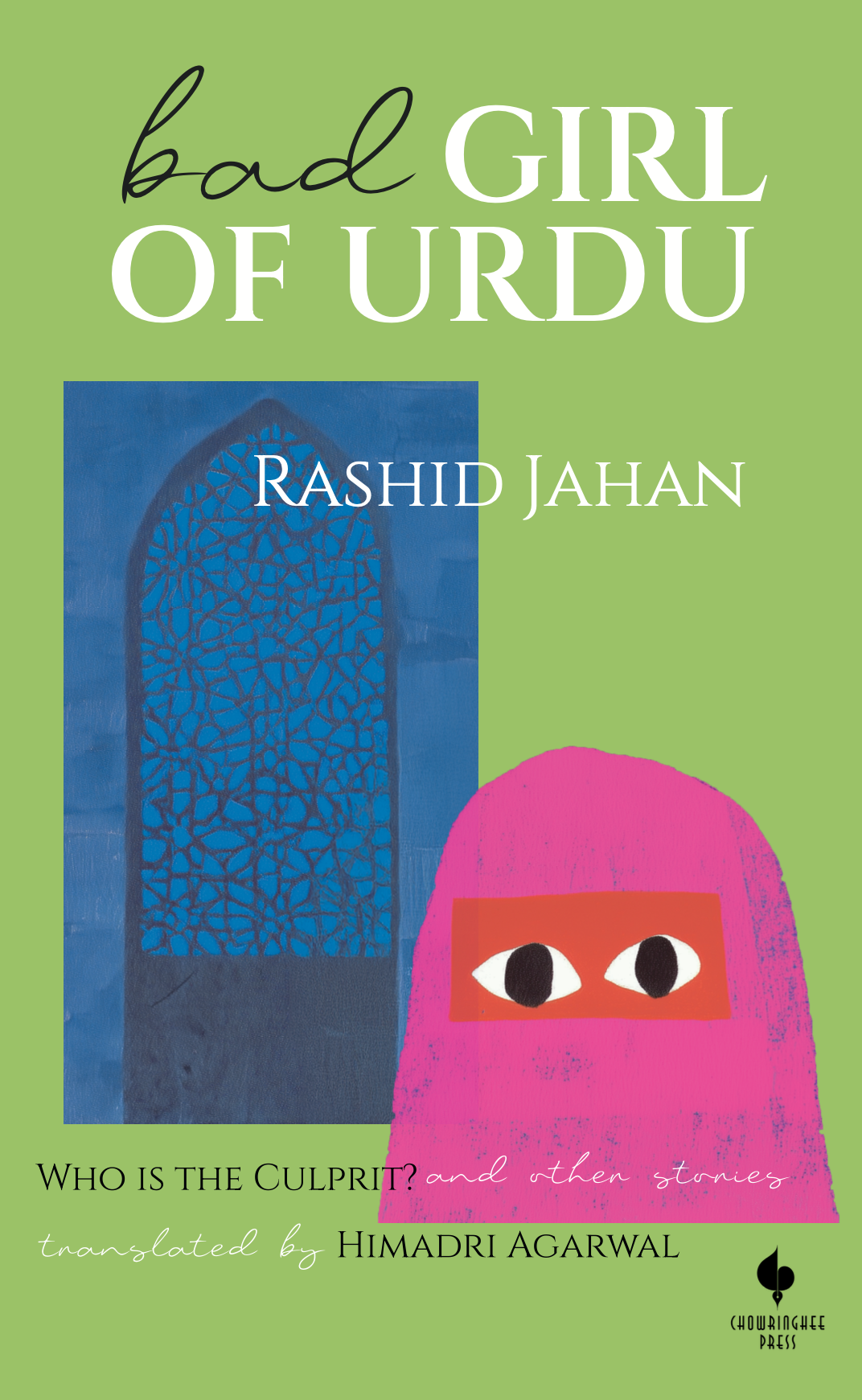
Bad Girl of Urdu cover
Bad Girl of Urdu
Stories by Rashid Jahan — the fearless Urdu writer who visited maternity wards and margins that polite fiction refused to enter. A radical voice, finally in English.
₹ 200
Buy Now
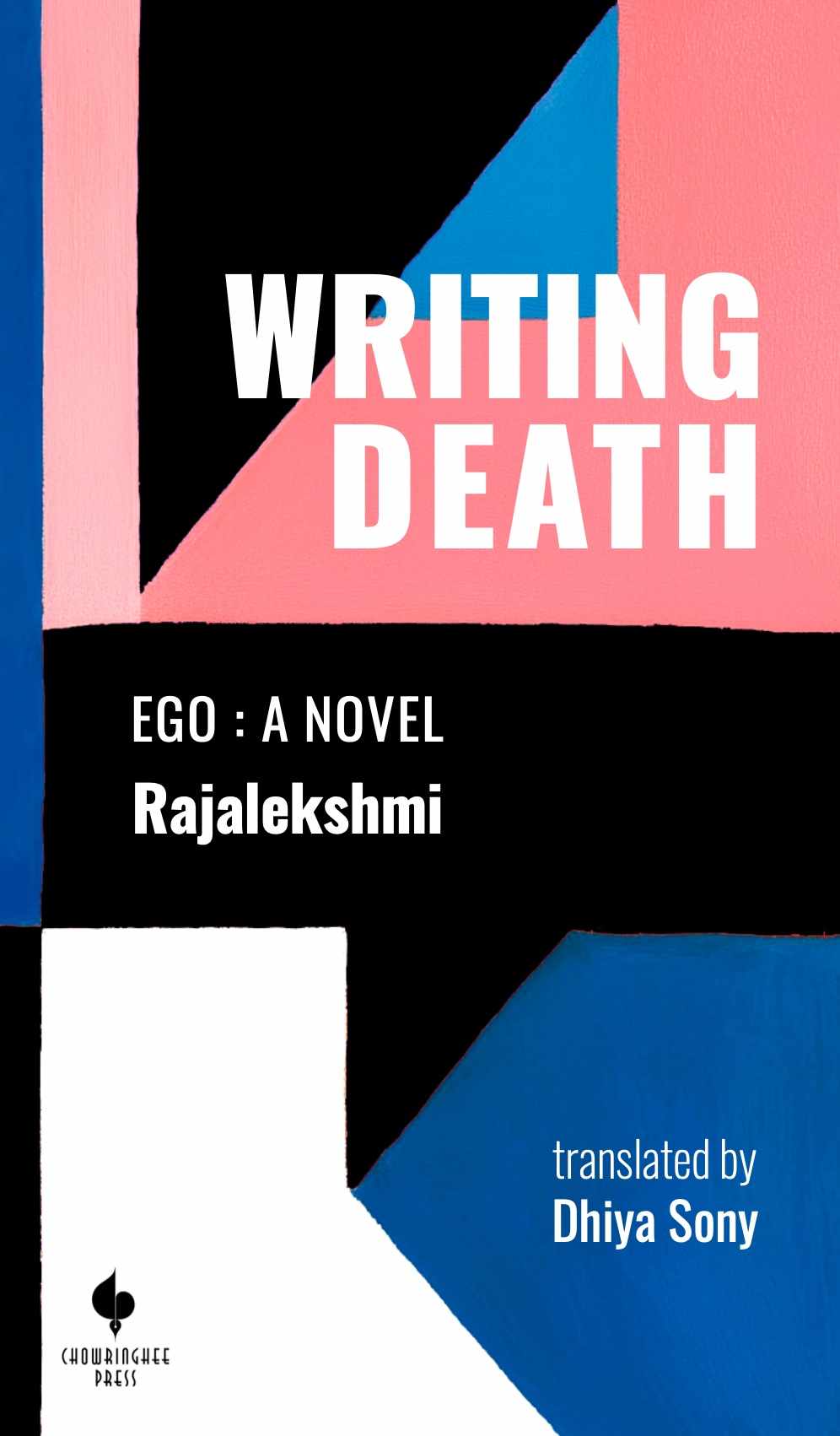
Writing Death Ego cover
Writing Death – Ego: A Novel
Set in early twentieth century Kerala, Ego traces the inner lives of those bound by familial duty — a nameless village, quiet devastations, timeless human drama.
₹ 300
Buy Now
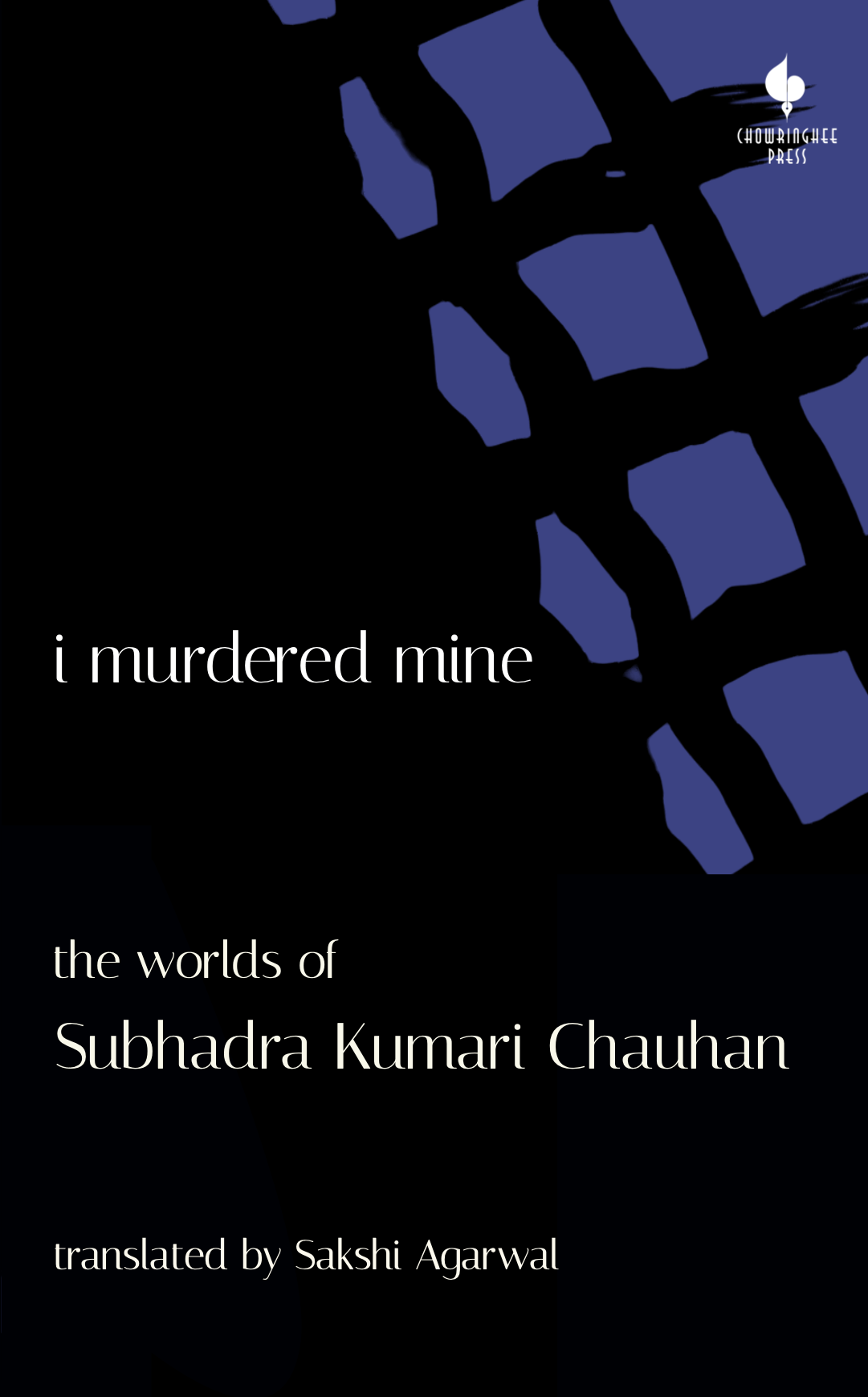
I Murdered Mine cover
I Murdered Mine
Stories by Subhadra Kumari Chauhan — showing how society steers people onto questionable paths, and how some refuse to bow down despite having no power.
₹ 200
Buy Now
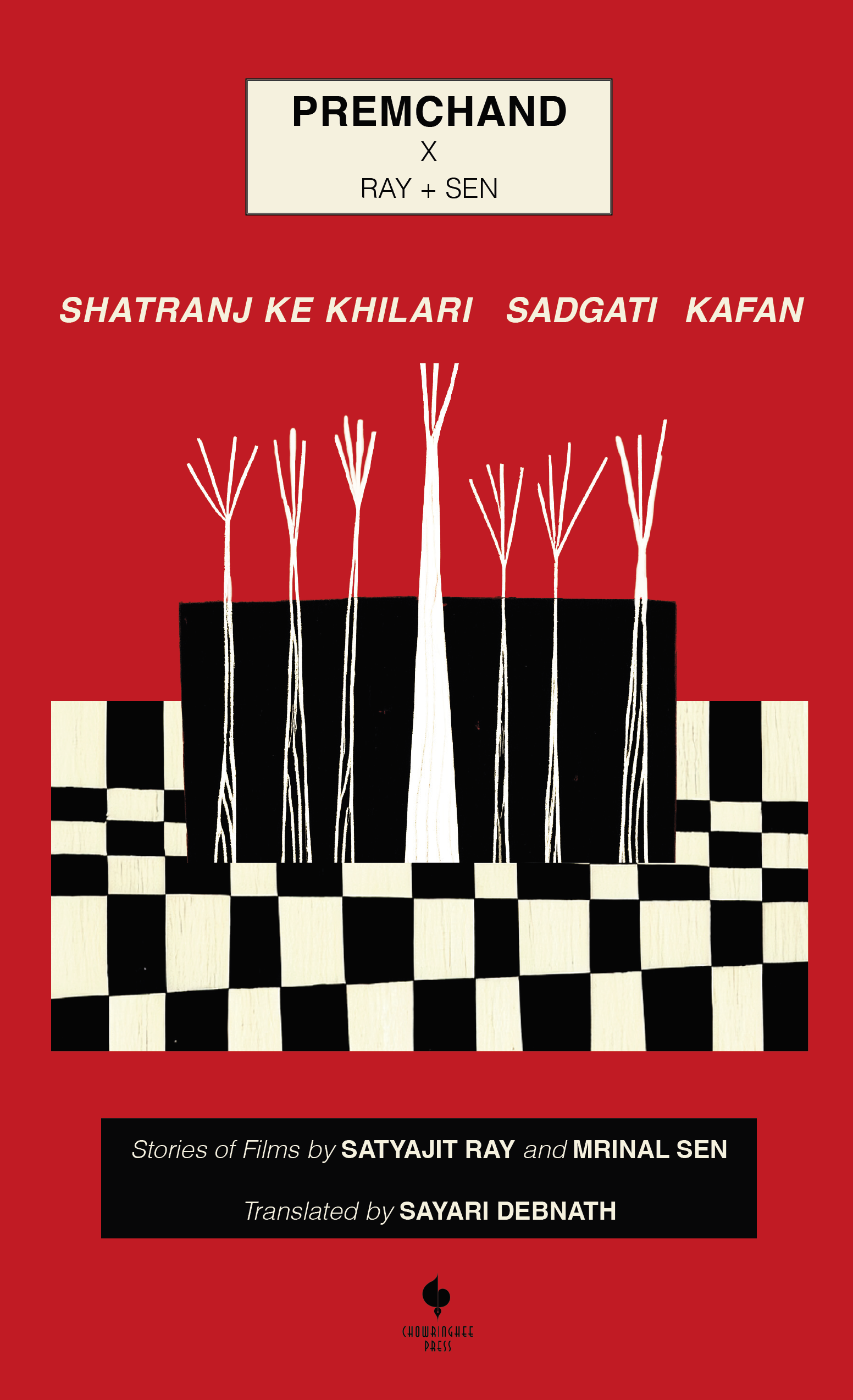
Premchand X Ray Sen cover
Premchand × Ray + Sen
New, modern translations of three Premchand stories adapted by masters: Shatranj Ke Khilari and Sadgati by Satyajit Ray, and Kafan by Mrinal Sen.
₹ 200
Buy Now
The Journey

From idea to imprint

Chowringhee Press moved from concept to catalogue with remarkable speed — a testament to what's possible when editorial vision meets the right publishing infrastructure.

Early 2025
The Idea Takes Shape
Arunava Sinha, with over one hundred translations already published, begins conceptualising an independent imprint specifically for Indian literary translation — tired of waiting for mainstream publishers to move faster.
June 2025
Chowringhee Press Launches on Stck
The imprint goes live with a welcome post and its inaugural title: Tagore's Last Novel — Rabindranath Tagore's final work, The Laboratory, translated from Bengali. The internet takes notice.
June–July 2025
Rapid Catalogue Expansion
Three more titles are added in quick succession: Bad Girl of Urdu (Rashid Jahan), I Murdered Mine (Subhadra Kumari Chauhan), and Writing Death – Ego (a Malayalam novel set in early twentieth century Kerala).
August 2025
Cinema & Literature Crossover
Premchand × Ray + Sen is published — a uniquely positioned title drawing readers from both literary translation and Indian cinema communities. The imprint's ambition to bridge art forms becomes clear.
2025 →
Five Titles, Growing Community
With five titles spanning Bengali, Hindi, Urdu, and Malayalam — and 25.8K + followers and counting — Chowringhee Press is now a functioning, recognised imprint in the Indian literary ecosystem. More titles are in preparation.
In Conversation

Arunava Sinha on Chowringhee Press

A reflective look at the imprint's origins, ambitions, and the philosophy behind bringing India's literary canon to new readers.

Arunava Sinha
Founder, Chowringhee Press · Translator · Professor of Creative Writing, Ashoka University
What made you decide to launch your own imprint rather than continue working with established publishers?

After translating more than a hundred books for publishers in India, the UK, and the US, I had a clear sense of what was possible — and what was being left on the table. The pipeline for Indian literary translation is painfully slow. A title might take three to five years from commission to publication. Chowringhee Press is an attempt to move at the speed that the literature deserves. The texts I want to bring out have been waiting long enough.

Why name it Chowringhee Press?

Chowringhee is the heart of Kolkata — a boulevard that has witnessed over two centuries of Bengali literary and intellectual life. It is a name that carries a sense of place and of history without being sentimental about it. I wanted the imprint to feel rooted — to signal that this is publishing with a geographic and cultural consciousness, not publishing from nowhere in particular. Chowringhee is also the title of my first translated book.

How do you decide which texts to publish?

The criterion is simple but demanding: it must be a text that deserves to be in English and is not yet there, or is there in an unsatisfactory form. The Laboratory was Tagore's last novel — and previous translations have been overlooked. Rashid Jahan wrote some of the most radical Urdu fiction of the twentieth century, and she was relatively unknown in English. These are not obscure choices. They are central figures in their own traditions who simply hadn't crossed the language boundary.

What does publishing on Stck make possible that wasn't possible before?

The economics of independent literary publishing are brutal under the traditional model. Stck changes the equation entirely. I can publish a title, price it at ₹200, and have it reach a reader in Bengaluru or Berlin the same day. I don't need a distributor, a warehouse, or a sales team. What I need is good work and readers who care about good work — and Stck gives me the infrastructure to connect the two. It is genuinely a new model for what literary publishing can be.

Where do you see Chowringhee Press in five years?

I would like Chowringhee Press to be the first name a reader thinks of when they want to understand Indian literary fiction in depth — across languages, across eras. Not just Bengali, not just the canonical period, but the full range. There is so much to do. We have barely begun.

Buzz & Reception

The conversation around Chowringhee Press

From literary Twitter to Instagram, readers and critics are paying attention to this new imprint.

Start Reading

Chowringhee Press is for readers who want more than what the mainstream offers.

If you care about great writing from India — in all its linguistic richness and historical depth — Stck makes it possible to support independent literary publishing directly.